
Baththalangunduwa
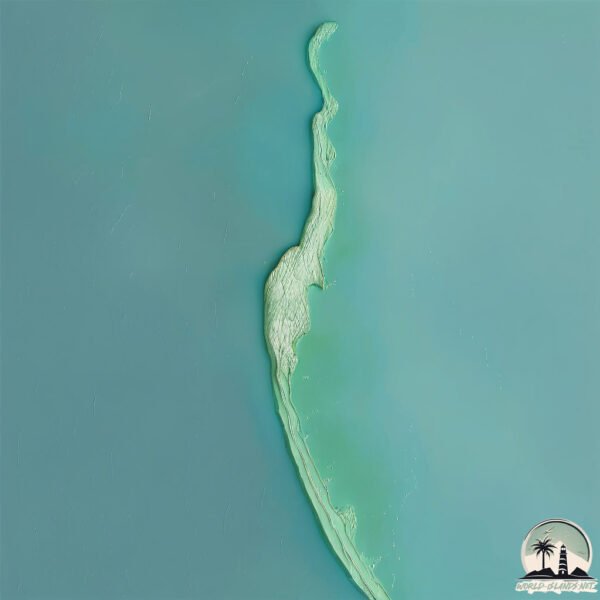
Welcome to Baththalangunduwa, a Tropical island in the Laccadive Sea, part of the majestic Indian Ocean. This guide offers a comprehensive overview of what makes Baththalangunduwa unique – from its geography and climate to its population, infrastructure, and beyond. Dive into the details:
- Geography and Size: Explore the island’s size and location.
- Climate and Weather: Weather patterns and temperature.
- Topography and Nature: Uncover the natural wonders of the island.
- Infrastructure and Travelling: Insights on reaching, staying, and making the most of your visit.
- News and Headlines: Latest News.
Geography and size of Baththalangunduwa
Size: 1.625 km²
Coastline: 15.7 km
Ocean: Indian Ocean
Sea: Laccadive Sea
Continent: Asia
Baththalangunduwa is a Small Island spanning 1.6 km² with a coastline of 15.7 km.
Archipel: –
Tectonic Plate: India – A major tectonic plate that initially moved northward at a rapid pace before colliding with the Eurasian Plate. This collision is responsible for the uplift of the Himalayas and the Tibetan Plateau.
The geographic heart of the island is pinpointed at these coordinates:
Latitude: 8.50644893 / Longitude: 79.78261627
Climate and weather of Baththalangunduwa
Climate Zone: Tropical
Climate Details: Tropical Savanna, Wet
Temperature: Hot
Climate Characteristics: Defined by distinct wet and dry seasons with high temperatures year-round. Pronounced rainfall occurs during the wet season, while the dry season is marked by drought.
Topography and nature of Baththalangunduwa
Timezone: UTC+05:30
Timezone places: Asia/Kolkata
Max. Elevation: -3 m
Mean Elevation: -9 m
Vegetation: Sparse Vegetation
Tree Coverage: 41%
The mean elevation is -9 m. Remarkably, this unique island barely emerges above the sea level, showcasing nature’s fascinating interplay with the ocean. The island is characterized by Plains: Flat, low-lying lands characterized by a maximum elevation of up to 200 meters. On islands, plains are typically coastal lowlands or central flat areas.
Dominating Vegetation: Sparse Vegetation
These regions have limited plant growth, typically due to extreme conditions like aridity or poor soils. Vegetation is scattered and consists of hardy plant species. Baththalangunduwa has a tree cover of 41 %.
Vegetation: 2 vegetation zones – Low Diversity Island
Islands with two distinct vegetation zones offer slightly more ecological variety. These zones could be due to differences in elevation, moisture, or other environmental factors. While still limited in biodiversity, these islands may offer a contrast between the two zones, such as a coastline with mangroves and an inland area with grassland.
Infrastructure and Travelling to Baththalangunduwa
Does the island have a public airport? no.
There is no public and scheduled airport on Baththalangunduwa. The nearest airport is Iranamadu Airport, located 116 km away.
Does the island have a major port? no.
There are no major ports on Baththalangunduwa. The closest major port is KANKESANTURAI, approximately 146 km away.
The mean population of Baththalangunduwa is 201 per km². Baththalangunduwa is Moderately Inhabited. The island belongs to Sri Lanka.
Continuing your journey, Mannar is the next notable island, situated merely km away.
යමුද බත්තලංගුණ්ඩුව දුපත බලන්න #srilanka #travel #baththalangunduwa #mojonewslk


Sri Lanka is classified as Developing region: Regions characterized by lower income levels, with economies in the process of industrialization and modernization. The level of income is Lower middle income.
News – Latest Updates and Headlines from Baththalangunduwa
Stay informed with the most recent news and important headlines from Baththalangunduwa. Here’s a roundup of the latest developments.
Please note: The data used here has been primarily extracted from satellite readings. Deviations from exact values may occur, particularly regarding the height of elevations and population density. Land area and coastline measurements refer to average values at mean high tide.