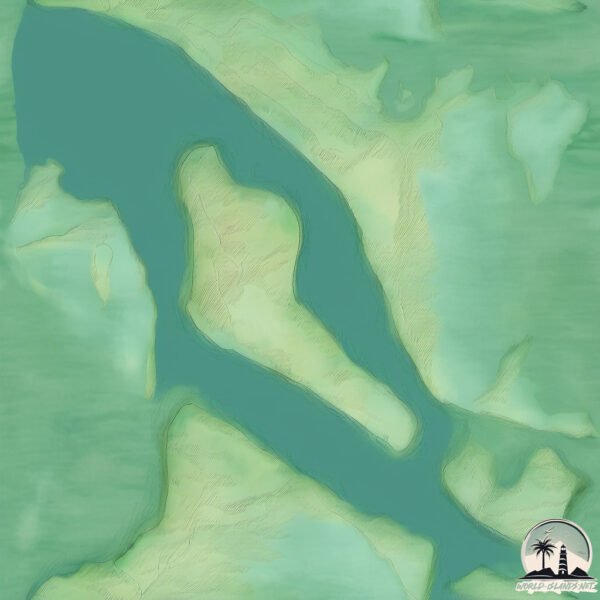
Welcome to Cannery, a Temperate island in the North Pacific Ocean, part of the majestic Pacific Ocean. This guide offers a comprehensive overview of what makes Cannery unique – from its geography and climate to its population, infrastructure, and beyond. Dive into the details:
Geography and size of Cannery
Size: 1.313 km²
Coastline: 6.6 km
Ocean: Pacific Ocean
Sea: North Pacific Ocean
Continent: North America
Cannery is a Small Island spanning 1.3 km² with a coastline of 6.6 km.
Archipel: –
Tectonic Plate: North America – Covers North America and parts of the Atlantic and Arctic Oceans, characterized by diverse geological features and varying levels of seismic activity.
The geographic heart of the island is pinpointed at these coordinates:
Latitude: 43.72908193 / Longitude: -124.12055385
Climate and weather of Cannery
Climate Zone: Temperate
Climate Details: Warm-Summer Mediterranean Climate
Temperature: Warm Summer
Climate Characteristics: Characterized by warm, dry summers and mild, wet winters, typical of coastal areas with abundant sunshine Rain is more common in the winter months, maintaining a moderate climate.
Topography and nature of Cannery
Timezone: UTC-08:00
Timezone places: America/Los_Angeles
Max. Elevation: 2 m
Mean Elevation: 2 m
Vegetation: Evergreen Needleleaf Forest
Tree Coverage: 68%
The mean elevation is 2 m. The highest elevation on the island reaches approximately 2 meters above sea level. The island is characterized by Plains: Flat, low-lying lands characterized by a maximum elevation of up to 200 meters. On islands, plains are typically coastal lowlands or central flat areas.
Dominating Vegetation: Evergreen Needleleaf Forest
Dominated by evergreen coniferous trees such as pines and firs, which retain their needle-like leaves throughout the year. These forests are often found in cooler climates. Cannery has a tree cover of 68 %.
Vegetation: 3 vegetation zones – Moderately Diverse Island
These islands start to show a broader range of ecological niches. With three vegetation zones, they may offer a mix of ecosystems like coastal areas, inland woods, and perhaps a distinct wetland or dry area. This diversity supports a wider range of flora and fauna, making these islands more ecologically complex than those with minimal diversity.
Infrastructure and Travelling to Cannery
Does the island have a public airport? no.
There is no public and scheduled airport on Cannery. The nearest airport is Southwest Oregon Regional Airport, located 37 km away.
Does the island have a major port? no.
There are no major ports on Cannery. The closest major port is GARDINER, approximately 1 km away.
The mean population of Cannery is 4 per km². Cannery is Gently Populated. The island belongs to United States of America.
Continuing your journey, Puget is the next notable island, situated merely km away.
TOP 10 BEST Places To Visit in CANARY ISLANDS of SPAIN
In this video, we're taking a look at the TOP 10 Best places to visit in the Canary Islands of Spain. These islands are truly a ...TOP 10 BEST Places To Visit in CANARY ISLANDS of SPAIN
In this video, we're taking a look at the TOP 10 Best places to visit ...
In this video, we're taking a look at the TOP 10 Best places to visit in the Canary Islands of Spain. These islands are truly a ...
Canary Islands Vacation Travel Guide | Expedia
The Canary Islands – a magical archipelago of cultural, historical and ...
The Canary Islands – a magical archipelago of cultural, historical and geological importance. Discover the best places to visit and ...
Choosing Your Canary Island: A Complete Guide
We're taking you on a journey to the Canary Islands. But not just any ...
We're taking you on a journey to the Canary Islands. But not just any journey, we're helping you decide which Canary Island to ...
Canary Islands - Part II: The World of the Fire Mountains - Go Wild
Part II: The World of the Fire Mountains highlights what it takes to ...
Part II: The World of the Fire Mountains highlights what it takes to survive in an unforgiving habitat, focusing on the fragile balance ...
BEST Canary Island for you? - TRAVEL GUIDE | Tenerife, Lanzarote, Gran Canaria, or Fuerteventura?
Which Canary Island should you visit? In this detailed Canary Islands ...
Which Canary Island should you visit? In this detailed Canary Islands travel guide, we compare Tenerife, Fuerteventura, Gran ...
Canary Islands: protesters have ‘had enough’ of tourists
⚠️IMPORTANT! DO NOT VISIT The Canary Islands In 2026, According to TRAVEL EXPERTS Fodor No Go List!
The Canary Islands have just been added to Fodor's 2026 “No List”… but ...
The Canary Islands have just been added to Fodor's 2026 “No List”… but who actually listens to these people? In this video ...
FIRST TIME IN THE CANARY ISLANDS! TENERIFE 🇪🇸
Secure your privacy with @Surfshark ! Enter coupon code JUMPINGPLACES ...
Secure your privacy with @Surfshark ! Enter coupon code JUMPINGPLACES for an extra 4 months free at ...
Canary Islands - ULTIMATE Travel Guide 2026
Trip recommendations below! - I apologize for the bad sound in 3 ...
Trip recommendations below! - I apologize for the bad sound in 3 places in the video. I hade to change it due to copyright claims ...
Food Trip Through The Canary Islands | Traditional Canarian Food
Canarian cuisine has several features that can't be found anywhere ...
Canarian cuisine has several features that can't be found anywhere else in the world. For example, gofio flour, which is made from ...
5 facts about Canary Islands #canary #islands #ocean #volcano #beach #5facts #travel #5places
Tenerife vs Gran Canaria | What is the BEST Canary island to visit?
You want to go to the Canary Islands, but wonder if Tenerife or Gran ...
You want to go to the Canary Islands, but wonder if Tenerife or Gran Canaria is the best island to visit? This video covers ...
CANARY Islands Cruise! Top Port tips, Attractions, Sights and Restaurants!
Important Guide to how to tackle cruiise ports in the Canary Islands. ...
Important Guide to how to tackle cruiise ports in the Canary Islands. Where they dock, how to get to town, whether you should buy ...
Canary Islands - Full Documentary
Living in the Canary Islands - Pros and Cons
Living in Tenerife Canary Islands Will Change Your Life FOREVER How to ...
Living in Tenerife Canary Islands Will Change Your Life FOREVER How to Survive the 21st Century ...
Places in Canary Islands that don’t feel real 🇮🇨🤯 #travel #adventure #nature #canaryislands
Beyond the Beaches: The Overtourism Crisis on the Canary Islands
Trouble in paradise: On the Spanish Canary Islands, recurring mass ...
Trouble in paradise: On the Spanish Canary Islands, recurring mass protests have been breaking out against the rise in tourism.
Why Does Spain Own Canary Islands?
Have you ever looked at a map and noticed those islands off the coast ...
Have you ever looked at a map and noticed those islands off the coast of Africa called the Canary Islands, and wondered why they ...
Best CANARY ISLAND for YOU? | TRAVEL GUIDE | Gran Canaria, Fuerteventura, La Palma and Lanzarote
Which is the best Canary Island for you? Let me show you four of the ...
Which is the best Canary Island for you? Let me show you four of the seven islands. Gran Canaria, Fuerteventura, La Palma and ...
TOP 15 Must-See Places & Things to Do in La Palma | Canary Islands
The best things you can't miss when visiting the Island of La Palma in ...
The best things you can't miss when visiting the Island of La Palma in the Canary Islands. This list of 15 best locations is the ...
Why Spain Owns the Canary Islands Despite Their Proximity to Africa
Feel free to comment below on what you think about this topic! ...
Feel free to comment below on what you think about this topic! Discover the history behind why Spain still controls the Canary ...
The Canary Islands Are About To Collapse: A Mega Tsunami Could Hit The Atlantic
The Canary Islands Are About To COLLAPSE: A Mega Tsunami Could Hit The ...
The Canary Islands Are About To COLLAPSE: A Mega Tsunami Could Hit The Atlantic Beneath the beaches and volcanic peaks ...
Canary Islands | Top 10 Luxury Destinations for 2023
Discover luxury on a 2023 Sovereign holiday... Sovereign Luxury Travel ...
Discover luxury on a 2023 Sovereign holiday... Sovereign Luxury Travel have curated our 'Top Ten Luxury Holidays in 2023' to ...
Hiking The Canary Islands? Watch this Guide Before Going
A breakdown of which islands I think are best when weighing up ...
A breakdown of which islands I think are best when weighing up landscapes, difficulty and other factors. Canary Islands more ...
Should You Visit Lanzarote? - Canary Islands
Lanzarote is one of the Canary islands off the coast of West Africa. ...
Lanzarote is one of the Canary islands off the coast of West Africa. It's known for its year-round warm weather, beaches and ...
United States of America is classified as Developed region: G7: Group of Seven – Major advanced economies, including Canada, France, Germany, Italy, Japan, the United Kingdom, and the United States. The level of income is High income: OECD.
News – Latest Updates and Headlines from Cannery
Stay informed with the most recent news and important headlines from Cannery. Here’s a roundup of the latest developments.
Loading...
Please note: The data used here has been primarily extracted from satellite readings. Deviations from exact values may occur, particularly regarding the height of elevations and population density. Land area and coastline measurements refer to average values at mean high tide.