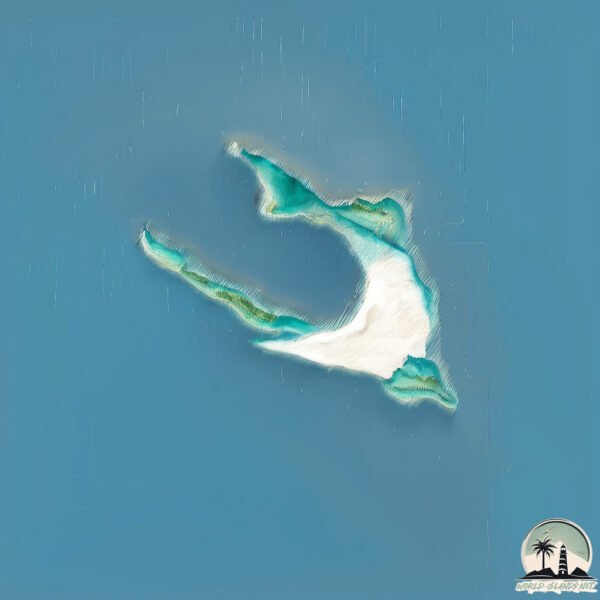
Welcome to Wake, a Tropical island in the North Pacific Ocean, part of the majestic Pacific Ocean. This guide offers a comprehensive overview of what makes Wake unique – from its geography and climate to its population, infrastructure, and beyond. Dive into the details:
Geography and size of Wake
Size: 6.289 km²
Coastline: 30 km
Ocean: Pacific Ocean
Sea: North Pacific Ocean
Continent: Oceania
Wake is a Small Island spanning 6.3 km² with a coastline of 30 km.
Archipel: Micronesia – A region in the western Pacific Ocean comprising thousands of small islands, known for their unique cultures, languages, and marine ecosystems.
Tectonic Plate: Eurasia – One of the world’s largest tectonic plates, the Eurasian Plate covers a significant portion of Europe and Asia. It’s characterized by diverse geological features, including the Ural Mountains, the European Plain, and the Himalayas formed from its collision with the Indian Plate.
The geographic heart of the island is pinpointed at these coordinates:
Latitude: 19.2893665 / Longitude: 166.63772667
Climate and weather of Wake
Climate Zone: Tropical
Climate Details: Tropical Rainforest Climate
Temperature: Hot
Climate Characteristics: This climate is typified by heavy rainfall throughout the year, high humidity, and consistently high temperatures, leading to lush rainforests and rich biodiversity. Seasonal temperature variations are minimal.
Topography and nature of Wake
Timezone: UTC+12:00
Timezone places: Pacific/Auckland
Max. Elevation: 5 m
Mean Elevation: -27 m
Vegetation: Sparse Vegetation
Tree Coverage: 8%
The mean elevation is -27 m. The highest elevation on the island reaches approximately 5 meters above sea level. The island is characterized by Plains: Flat, low-lying lands characterized by a maximum elevation of up to 200 meters. On islands, plains are typically coastal lowlands or central flat areas.
Dominating Vegetation: Sparse Vegetation
These regions have limited plant growth, typically due to extreme conditions like aridity or poor soils. Vegetation is scattered and consists of hardy plant species. Wake has a tree cover of 8 %.
Vegetation: 4 vegetation zones – Diverse Island
Four distinct vegetation zones mark these islands as ecologically diverse. They might feature varied landscapes such as forests, beaches, grasslands, and rocky areas. Such diversity reflects the island’s complex ecological interactions and varied habitats, which can support a rich array of wildlife and plant species.
Infrastructure and Travelling to Wake
Does the island have a public airport? yes.
Wake has a public and scheduled airport. The following airports are located on this island: Wake Island Airfield.
Does the island have a major port? yes.
Wake is home to a major port. The following ports are situated on the island: .
The mean population of Wake is per km². Wake is . The island belongs to United States of America.
Continuing your journey, Majuro is the next notable island, situated merely km away.
The Battle of Wake Island 1941 - Animated
Join me in War Thunder for FREE on PC, PS®5 and Xbox Series X|S: ...
Battle of Wake Island (1941)
Please consider supporting our videos on Patreon ...
Wake Island
Provided to YouTube by The Orchard Enterprises Wake Island · Johan ...
Provided to YouTube by The Orchard Enterprises Wake Island · Johan Söderqvist · Patrik Andrén · Joel Eriksson Battlefield V: War ...
Wake Island
Provided to YouTube by Rhino/Elektra Wake Island · Oscar Brand Tell It ...
Provided to YouTube by Rhino/Elektra Wake Island · Oscar Brand Tell It To The Marines ℗ 1960 Elektra Entertainment for United ...
450 Marines Vs The Imperial Japanese Navy - Wake Island
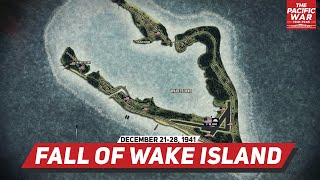
Fall of Wake Island - Pacific War #5 Animated Historical DOCUMENTARY
Download Monster Legends before December 31st and claim your reward! ...
Wake Island Defenders or what happened after Pearl Harbor
The History Guy remembers the events that occurred after the Japanese ...
The History Guy remembers the events that occurred after the Japanese attack on Pearl Harbor and the actions of the Wake Island ...
50 Facts About - Wake Island #history #facts #island
Wake Island’s Epic 1941 Stand! ⚓ #WakeIsland #WWII
Wake Island's 1941 defense stunned Japan! Uncover this WWII ...
Wake Island's 1941 defense stunned Japan! Uncover this WWII epic—subscribe now! ⚓ #WakeIsland #WWII ...
The Battle of Wake Island 1941
The Full Battle of Wake Island 1941: Rare Footage of 15 Days in Hell | WW2 Documentary
Wake Island 1941: 15 Days in Hell A lonely coral outpost in the vast ...
Wake Island 1941: 15 Days in Hell A lonely coral outpost in the vast Pacific—isolated, forgotten, and surrounded by an empire on ...
Wake Island approach and Departure
HC-130J stopping at Wake Island for fuel.
HC-130J stopping at Wake Island for fuel.
Fall of Wake Island - Radio Broadcast
The following audio is an American radio broadcast announcing the ...
The following audio is an American radio broadcast announcing the presumed fall of Wake Island. The video is captured ...
Battlefield V - Wake island (Round Start 1) OST.
It's the first time i do something like this. lol if it's bad, oh well ...
It's the first time i do something like this. lol if it's bad, oh well i've tried.
Island-hopping: Wake Atoll
Just to the west of the International Date Line is Wake Island, an ...
Just to the west of the International Date Line is Wake Island, an American territory about 2400 miles west of Hawaii, where the ...
Wake Island 4k
Description.
Description.
MASSIVE WWII AIR BATTLE AT WAKE ISLAND | Biggest Battles of WWII | History
Waves of hellcat fighters speed towards the enemy in this all out ...
Waves of hellcat fighters speed towards the enemy in this all out attack of annihilation, in this clip from Dogfights "The Zero Killer.
Battlefield V Soundtrack - End of Round: Wake Island
Put together by yours truly from ripped game files. Composed by Patrik ...
Put together by yours truly from ripped game files. Composed by Patrik Andrén and Johan Söderqvist. Twitter: ...
Wake Island | Battlefield V OST
Music from Battlefield V (2018) published by Electronic Arts. ...
Music from Battlefield V (2018) published by Electronic Arts. Battlefield V: War in the Pacific (Original Soundtrack) by Johan ...
Battlefield V - Wake Island (Round Start 2) OST.
Stranded 2,500 Miles from Pearl Harbor - Wake Island - The Loneliest Battle of WW2
Pictured: Japanese Patrol Boat No.32 and Patrol Boat No.33 beached and ...
Pictured: Japanese Patrol Boat No.32 and Patrol Boat No.33 beached and burning in attempt to land an amphibious invasion ...
America’s First WWII Victory: The Battle for Wake Island | WW2
Help reach my first 1000 subscribers! Click to subscribe ➡️ ...
Help reach my first 1000 subscribers! Click to subscribe ➡️
http://bit.ly/45cLCLs 🎖️ In December 1941, as Japanese forces ...
Wake Island Tour, December 2020
Tour of select historical points of interest on Wake Island, with ...
Tour of select historical points of interest on Wake Island, with special focus on the origin of the Naval Construction Force.
The Island That Refused to Fall – The Siege of Wake Island
The Island That Refused to Fall – The Siege of Wake Island — In the ...
The Island That Refused to Fall – The Siege of Wake Island — In the opening days of World War II, a tiny Pacific outpost made ...
The Battle for Wake Island-Part 1- December 8-11 Episode 525
This week Seth Paridon and Jon Parshall tackle the topic of the ...
This week Seth Paridon and Jon Parshall tackle the topic of the American defense of Wake Island. In this much-anticipated series ...
United States of America is classified as Developed region: G7: Group of Seven – Major advanced economies, including Canada, France, Germany, Italy, Japan, the United Kingdom, and the United States. The level of income is High income: OECD.
News – Latest Updates and Headlines from Wake
Stay informed with the most recent news and important headlines from Wake. Here’s a roundup of the latest developments.
Loading...
Please note: The data used here has been primarily extracted from satellite readings. Deviations from exact values may occur, particularly regarding the height of elevations and population density. Land area and coastline measurements refer to average values at mean high tide.