
Kōzu Shima
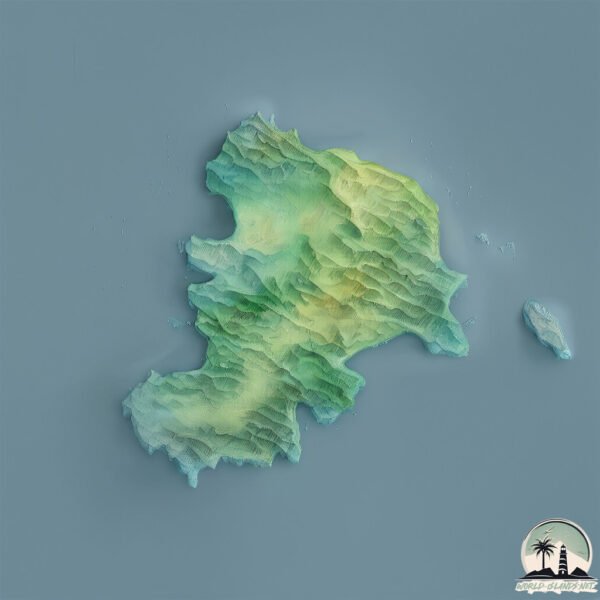
Welcome to Kōzu Shima, a Temperate island in the Philippine Sea, part of the majestic Pacific Ocean. This guide offers a comprehensive overview of what makes Kōzu Shima unique – from its geography and climate to its population, infrastructure, and beyond. Dive into the details:
- Geography and Size: Explore the island’s size and location.
- Climate and Weather: Weather patterns and temperature.
- Topography and Nature: Uncover the natural wonders of the island.
- Infrastructure and Travelling: Insights on reaching, staying, and making the most of your visit.
- News and Headlines: Latest News.
Geography and size of Kōzu Shima
Size: 18.7 km²
Coastline: 31.2 km
Ocean: Pacific Ocean
Sea: Philippine Sea
Continent: Asia
Kōzu Shima is a Medium Island spanning 19 km² with a coastline of 31 km.
Archipel: Nanpō Islands – An extension of the Japanese archipelago into the Pacific Ocean, known for their scenic beauty and diverse marine life.
Tectonic Plate: Eurasia – One of the world’s largest tectonic plates, the Eurasian Plate covers a significant portion of Europe and Asia. It’s characterized by diverse geological features, including the Ural Mountains, the European Plain, and the Himalayas formed from its collision with the Indian Plate.
The geographic heart of the island is pinpointed at these coordinates:
Latitude: 34.214327 / Longitude: 139.14775083
Climate and weather of Kōzu Shima
Climate Zone: Temperate
Climate Details: Humid Subtropical Climate
Temperature: Hot Summer
Climate Characteristics: With continuous rainfall and hot summers, this climate is common in some coastal regions, supporting diverse vegetation.
Topography and nature of Kōzu Shima
Timezone: UTC+09:00
Timezone places: Asia/Tokyo
Max. Elevation: 504 m
Mean Elevation: 170 m
Vegetation: Evergreen Broadleaf Forest
Tree Coverage: 79%
The mean elevation is 170 m. The highest elevation on the island reaches approximately 504 meters above sea level. The island is characterized by Plateau: Elevated flatlands rising sharply above the surrounding area, with a maximum elevation over 500 meters but a mean elevation less than 300 meters, forming unique highland areas on islands.
Dominating Vegetation: Evergreen Broadleaf Forest
Characterized by dense, lush canopies of broadleaf trees that retain their leaves year-round. These forests are typically found in tropical and subtropical regions and are known for their high biodiversity. Kōzu Shima has a tree cover of 79 %.
Vegetation: 8 vegetation zones – Very Highly Diverse Island
Islands in this range are ecological powerhouses, showcasing a wide array of vegetation zones. Each zone, from lush rainforests to arid scrublands, coastal mangroves to mountainous regions, contributes to a complex and interdependent ecosystem. These islands are often hotspots of biodiversity, supporting numerous species and intricate ecological processes.
Infrastructure and Travelling to Kōzu Shima
Does the island have a public airport? no.
There is no public and scheduled airport on Kōzu Shima. The nearest airport is Niijima Airport, located 19 km away.
Does the island have a major port? no.
There are no major ports on Kōzu Shima. The closest major port is SHIMODA KO, approximately 52 km away.
The mean population of Kōzu Shima is 109 per km². Kōzu Shima is Moderately Inhabited. The island belongs to Japan.
Continuing your journey, Nii Jima is the next notable island, situated merely km away.
Japan is classified as Developed region: G7: Group of Seven – Major advanced economies, including Canada, France, Germany, Italy, Japan, the United Kingdom, and the United States. The level of income is High income: OECD.
News – Latest Updates and Headlines from Kōzu Shima
Stay informed with the most recent news and important headlines from Kōzu Shima. Here’s a roundup of the latest developments.
- Light mag. 3.1 earthquake - North Pacific Ocean, 50 km east of Kozu Shima Island, Tokyo, Japan, on Tuesday, Nov 3, 2026, at 12:13 pm (GMT +9) - Volcano Discoveryon 3 November 2026
Light mag. 3.1 earthquake - North Pacific Ocean, 50 km east of Kozu Shima Island, Tokyo, Japan, on Tuesday, Nov 3, 2026, at 12:13 pm (GMT +9) Volcano Discovery
- Light mag. 3.9 earthquake - Philippine Sea, 129 km west of Hachijo Jima Island, Tokyo, Japan, on Monday, Oct 26, 2026, at 01:04 pm (GMT +9) - Volcano Discoveryon 26 October 2026
Light mag. 3.9 earthquake - Philippine Sea, 129 km west of Hachijo Jima Island, Tokyo, Japan, on Monday, Oct 26, 2026, at 01:04 pm (GMT +9) Volcano Discovery
- Strong mag. 5.2 earthquake - 163 km S of Ōyama, Japan, on Tuesday, Dec 23, 2025, at 06:44 pm (GMT +9) - Volcano Discoveryon 23 December 2025
Strong mag. 5.2 earthquake - 163 km S of Ōyama, Japan, on Tuesday, Dec 23, 2025, at 06:44 pm (GMT +9) Volcano Discovery
- Kozu Shima Island, Tokyo, Japan, Earthquakes: Latest Quakes - Volcano Discoveryon 26 April 2025
Kozu Shima Island, Tokyo, Japan, Earthquakes: Latest Quakes Volcano Discovery
- Preseismic anomalous telluric current signals observed in Kozu-shima Island, Japan - PNASon 6 March 2022
Preseismic anomalous telluric current signals observed in Kozu-shima Island, Japan PNAS
- Preseismic anomalous telluric current signals observed in Kozu-shima Island, Japan - PNASon 5 March 2022
Preseismic anomalous telluric current signals observed in Kozu-shima Island, Japan PNAS
- Weathering With You Volume 1 Review - Anime UK Newson 27 September 2020
Weathering With You Volume 1 Review Anime UK News
- Ocean Power Technologies (OPT) announces deployment of Powerbuoy off Japanese coast - Renewable Energy Magazineon 24 April 2017
Ocean Power Technologies (OPT) announces deployment of Powerbuoy off Japanese coast Renewable Energy Magazine
- Miyake-shima - Volcano Discoveryon 4 June 2016
Miyake-shima Volcano Discovery
- Weak mag. 2.5 earthquake - North Pacific Ocean, 37 km northeast of Kozu Shima Island, Tokyo, Japan, on Friday, Nov 28, 1986, at 07:30 pm (Universal Time) - Volcano Discoveryon 28 November 1986
Weak mag. 2.5 earthquake - North Pacific Ocean, 37 km northeast of Kozu Shima Island, Tokyo, Japan, on Friday, Nov 28, 1986, at 07:30 pm (Universal Time) Volcano Discovery
Please note: The data used here has been primarily extracted from satellite readings. Deviations from exact values may occur, particularly regarding the height of elevations and population density. Land area and coastline measurements refer to average values at mean high tide.